
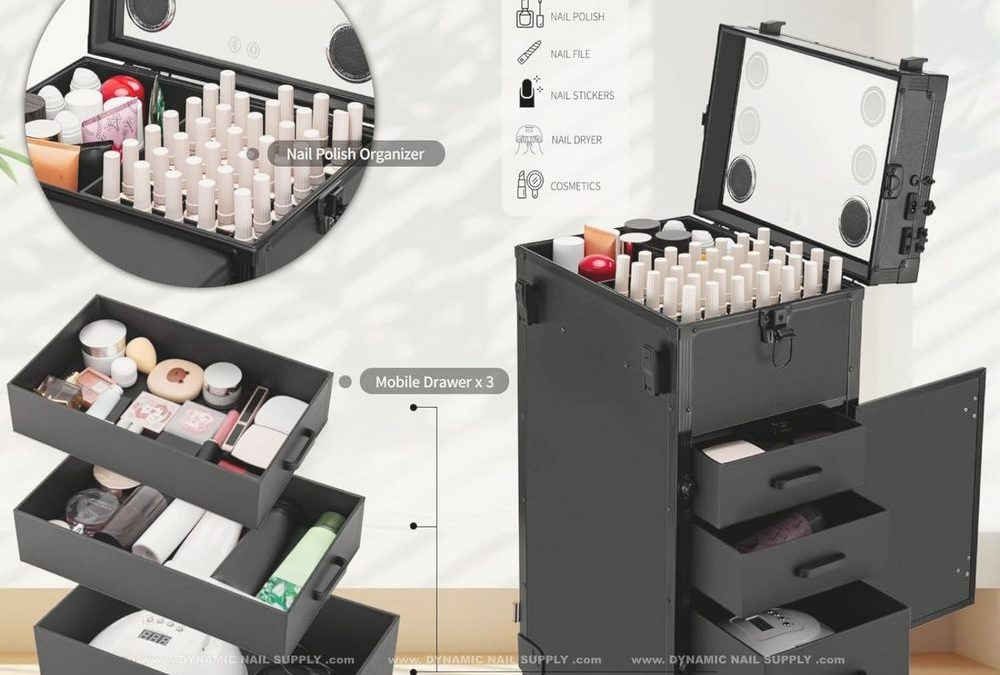
The White Portable & Foldable Rolling Manicure Nail Table is a mobile manicure workstation that folds into a wheeled train case with drawers, acrylic shelves and polished metal trim.
Overview: surfaces to treat on the white portable nail table
When you clean portable nail table surfaces you need to treat each material by type. This white model combines a matte tabletop, clear acrylic shelving, glossy plastic jars and polished metal corners and latches. Each surface reacts differently to cleaners and contact time, so one single product or method is not ideal for everything.
Daily quick-clean routine for the matte tabletop
The matte white tabletop is the working surface where dust, nail dust and product residue collect. For daily service runs you want a routine that removes visible debris and sets the surface up for periodic disinfection without changing the finish.
- Remove loose debris: brush or vacuum loose dust and clippings first. Use a soft-bristle counter brush or a handheld nozzle so you don’t grind grit into the matte finish.
- Wipe with a mild detergent: mix a few drops of pH-neutral dish soap in warm water. Dampen a microfiber cloth, wring until nearly dry, and wipe the tabletop in one direction to avoid streaks.
- Rinse residue: wipe again with a cloth dampened in plain water to remove soap film.
- Dry immediately: use a dry microfiber towel to remove all moisture. Matte finishes show water spots if left to air dry.
- Spot disinfect between clients: use an EPA-registered disinfectant compatible with furniture finishes, applied per label directions. Spray onto a cloth first rather than directly on the tabletop to control saturation and avoid pooling at seams.
Tip: avoid high-alcohol sprays at full strength on matte laminate. They can alter surface appearance over time. Diluted solutions or disinfectants labeled safe for laminate are preferred.
Cleaning clear acrylic shelving and organizers
Clear acrylic shelving shows marks and scratches more easily than other surfaces. Your protocol should remove grease and product stains while minimizing abrasion.
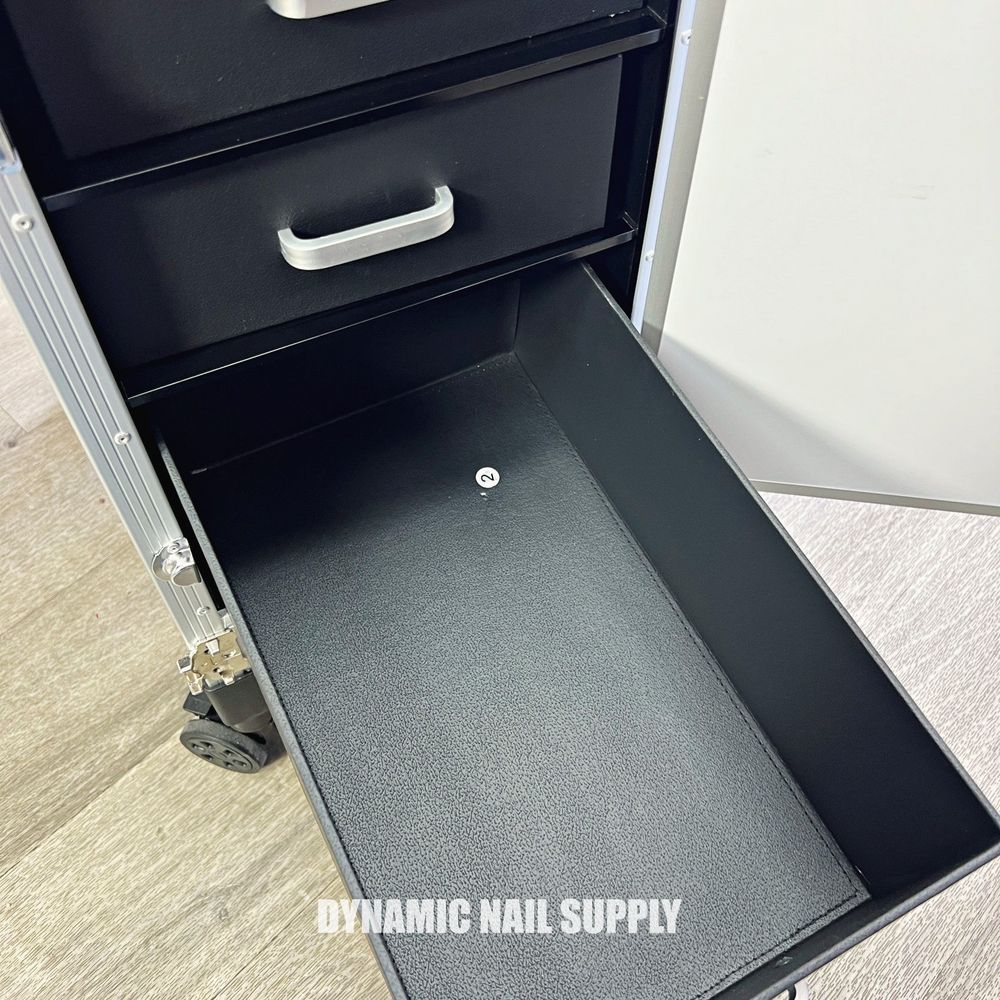
- Remove contents: take out jars, bottles and removable drawers before cleaning shelves.
- Use a mild soap solution: warm water with a tiny amount of dish soap works well. Clean with a soft, lint-free cloth—no paper towels or abrasive pads.
- Rinse with clean water and dry: wipe with a second damp cloth and then dry with a microfiber cloth to avoid water streaks.
- Remove light scratches: for fine scuffs use a plastic polish formulated for acrylic and follow manufacturer instructions; test in an inconspicuous area first.
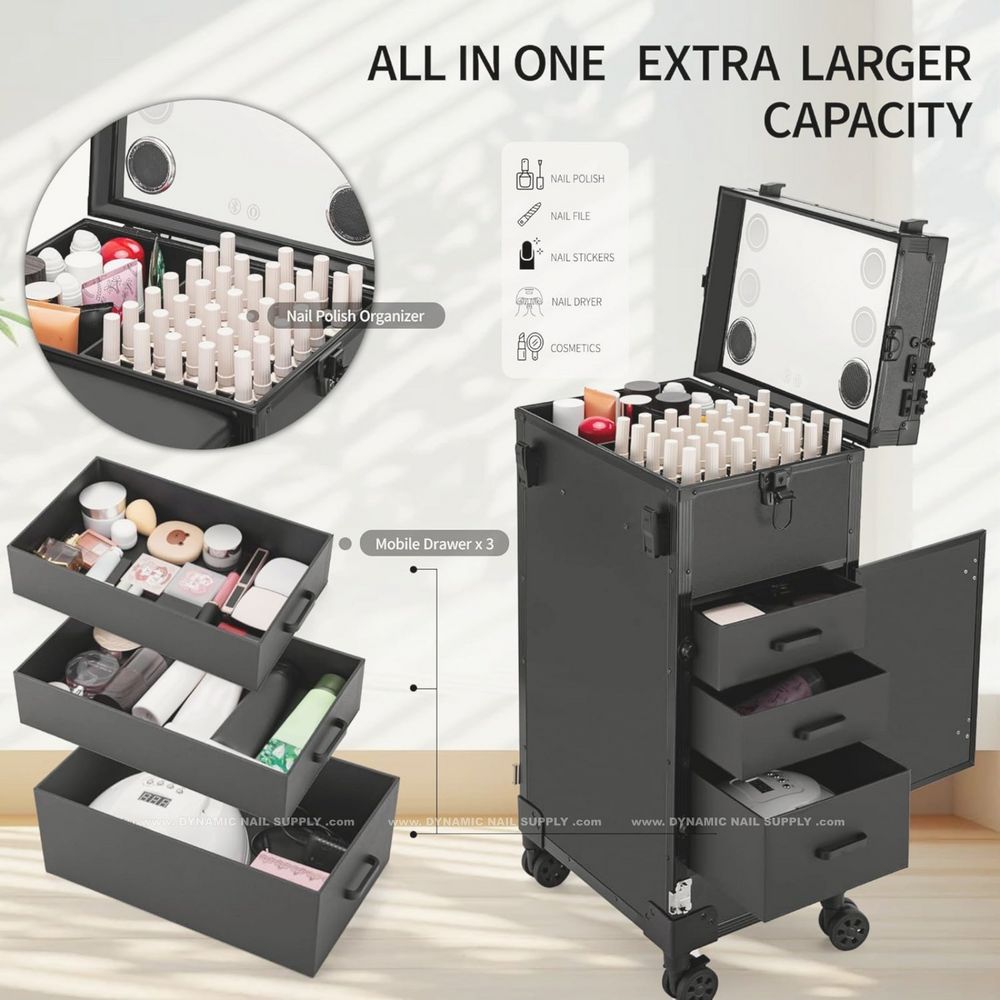
Because the train-case interior is black, you’ll notice dust and polish residue more on clear shelves against that background; cleaning more frequently keeps the display crisp.
Glossy plastic jars and removable drawers care
Glossy jars and plastic drawer fronts are resilient but show fingerprints and product splatter. A gentle approach preserves gloss and keeps labels readable.
- Empty and sort: clean jars and small containers separately on a sink tray to avoid contaminating the station.
- Wash by hand: warm, soapy water and a soft sponge removes polish residue. Rinse thoroughly.
- Air-dry or towel-dry: allow pieces to dry fully before returning them to drawers to avoid trapping moisture.
- Disinfect hard plastic items: after drying, wipe with a disinfectant compatible with hard plastics, following labeled contact time. For removable items, you can also use a 70% isopropyl alcohol wipe if the label allows.
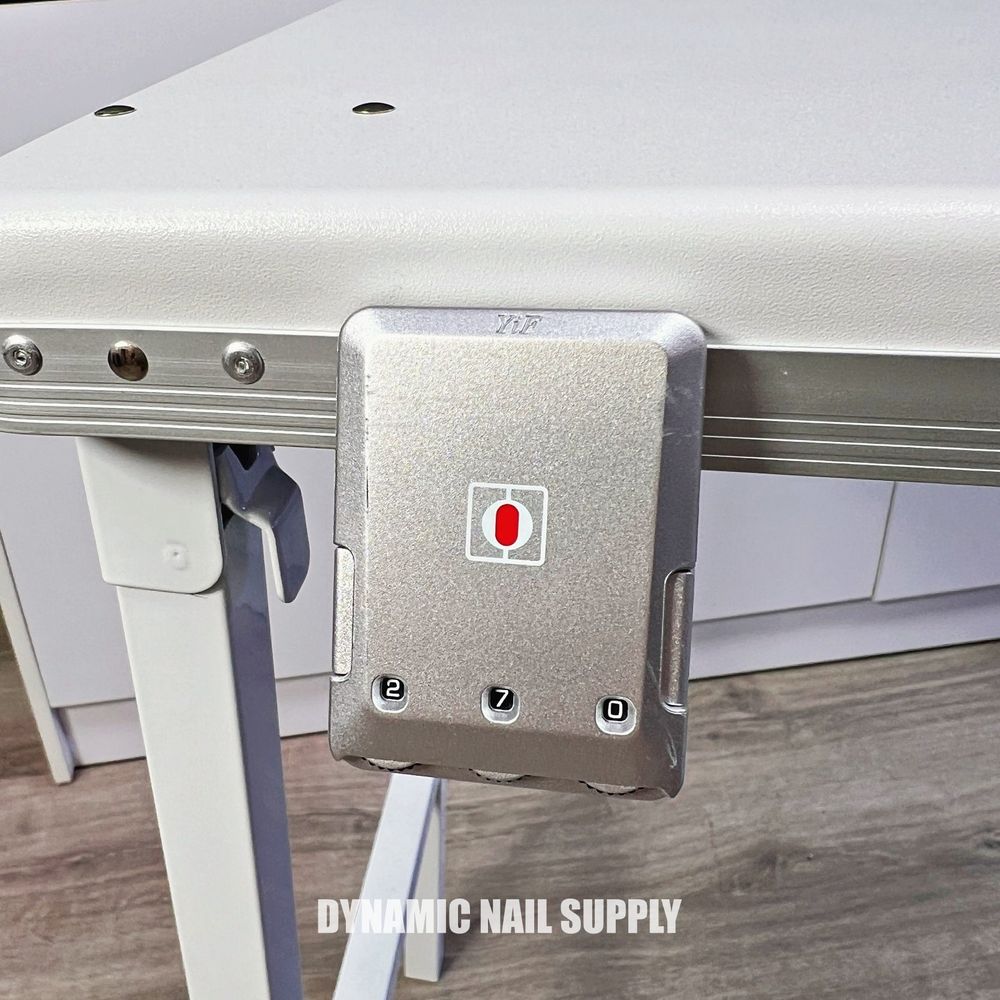
Polished metal trim and latches maintenance
Metal corners, latches and alloy handles are both decorative and functional. They tolerate different products than plastic and acrylic.
- Remove surface dirt: wipe with a damp microfiber cloth to remove dust and grime.
- Polish sparingly: if the metal shows fingerprints, use a mild metal polish applied to a cloth, not directly to hardware. Buff gently and remove residue.
- Disinfect high-touch points: door latches and retractable handles should be wiped with a disinfectant wipe or a cloth dampened with an approved sanitizing solution, following contact time on the product label.
Do not immerse metal trim in water or let liquid pool at corners; prolonged exposure can loosen fasteners or cause corrosion over time.
Disinfection protocol to meet salon hygiene standards
To maintain a hygienic mobile station you need both cleaning (removing debris) and disinfection (reducing microbes). Follow product labels and local salon regulations for contact times and approved products.
- Clean first: always remove visible soil before applying disinfectants—disinfectants are less effective on dirty surfaces.
- Choose compatible disinfectants: select products labeled safe for plastics, laminate and metal, or use diluted hospital-grade solutions as allowed by local guidance.
- Apply and respect contact time: spray or wipe so the surface stays wet for the full contact time listed by the disinfectant manufacturer.
- Wipe dry if required: some products recommend wiping after contact time; others allow air dry. Follow labeling to protect finishes.
When you clean portable nail table components between clients, pay special attention to armrest areas and drawer handles where cross-contamination risk is higher.
Workflow tips for traveling nail techs with a foldable train case
Design a workflow that keeps clean and dirty items separated while you work. Use removable trays for disposables and a closed drawer for clean tools. When packing the unit for travel make sure all items are fully dry to avoid trapped moisture and odors.
For route planning, assign a dedicated quick-clean kit with a microfiber cloth set, a small spray bottle of approved disinfectant, a hand brush and a spare set of dispensable liners for the tabletop. Store that kit in one of the top removable drawers for easy access.
You can build maintenance into setup: open the case, remove trays, wipe the matte top and acrylic shelves, and return items only after they are dry. For routine maintenance between clients in a mobile setting Portable Rolling Manicure Table is practical because the fold-flat design lets you access drawers and shelves without moving everything onto a counter.
Materials and product compatibility checklist
Reference this quick checklist when choosing cleaners and disinfectants for the white rolling manicure station:
- Matte tabletop: use pH-neutral cleaners; avoid high-alcohol concentrated sprays and abrasive pads.
- Acrylic shelves: use mild soap and water; avoid ammonia-based glass cleaners unless labeled safe for acrylic.
- Glossy plastics: hand-wash and disinfect per label; no boiling or harsh solvents.
- Polished metal: mild soap and dry; metal polish only as needed, avoid prolonged water exposure.
Best for and Not ideal for
Best for
- Mobile nail artists who need a compact, fold-flat workstation with storage.
- Techs who want a clean white aesthetic that highlights pastel and neon accents.
- Salon pros who require quick access to drawers and removable organizers while maintaining hygiene.
Not ideal for
- Environments where heavy chemical sterilants are used routinely and may damage finishes.
- Workflows that require constant immersion cleaning—this is a furniture-grade, not sink-safe, assembly.
- Setups that cannot allow tools and containers to dry fully before packing for travel.
Safety, handling and storage notes
Keep disinfectants in labeled containers away from direct sunlight and heat. Store loose powders and liquids in sealed compartments to prevent spills inside drawers. When transporting, lock latches and secure the retractable handle; avoid uneven surfaces that may tip the case when loaded.
Final recap
- Match cleaner to material: matte, acrylic, glossy plastic and metal need different care.
- Clean before you disinfect and always follow product contact times.
- Keep removable parts dry before packing and store a compact quick-clean kit in a top drawer.